
How to Track Covered Call P&L and Premium Yield
Separate stock P&L from net premiums and yield so a covered-call lot is one structure, not a pile of fills. How CoveredLoop keeps those numbers on the same card.
By CoveredLoop
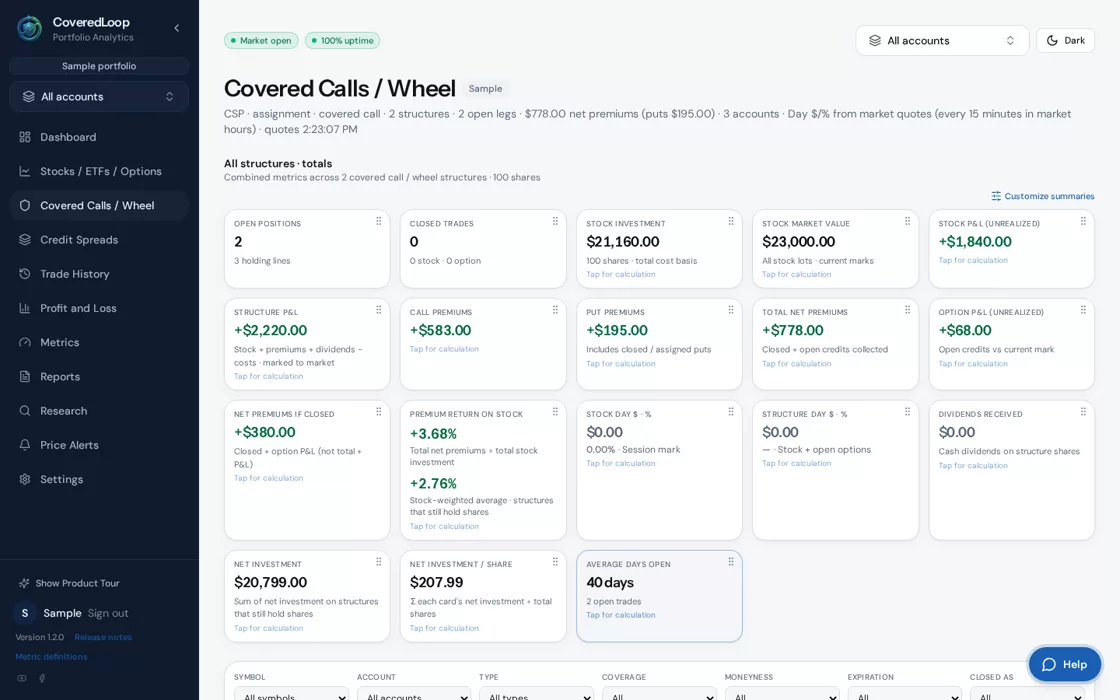
A covered-call seller does not think in fills. They think in lots: shares against a short call, maybe a roll last Tuesday, maybe a dividend. If those legs live in a generic options blotter, premium yield becomes a scavenger hunt and stock P&L never sits next to the credit that was supposed to cushion it.
This note is about tracking, not about whether you should sell calls. Options involve risk. Nothing here is a recommendation. See the disclaimer at the bottom and the risk disclosures.
One structure, not a mash of the same ticker
Two lots of the same name — different cost, different short strike, different account — are two books. CoveredLoop keeps covered calls and wheels in their own workspace so the same ticker is not mashed into one blob. Each card is meant to answer the desk questions: stock P&L on the shares, net premiums collected, premium yield against capital still in the trade, net investment after credits, and live marks on open legs.
Those figures share a date range and account picker with the dashboard. If “today’s unrealized” on the tile does not match the card, something in the book is tagged wrong — leftover shares, a call in the standalone options bucket, a closed put that never joined the wheel. The fix is recategorize, split, or merge, not a side spreadsheet.
Premium yield is not the credit on the last fill
Credit on the last opening sale is easy. Yield on the structure is harder: you need net premiums including closed rolls and closed wheel puts that belong to this lot, divided by the capital that is still tied up. If you only sum currently open short calls, a lot you have been rolling for a year looks like it started last week.
CoveredLoop keeps closed premium on the card for that reason. When you roll, the near leg closes, the far leg opens, and the structure identity stays. The yield should move with the net credit of the roll, not reset.
Stock P&L still matters
A covered call can show a pretty premium line while the shares are underwater. Splitting the two numbers is the point of a structure card. Net investment after credits is the third number: what you still have in the trade if you stopped selling calls tomorrow. Live marks keep unrealized from being yesterday’s close.
If you use Tradier, day marks follow the broker. Sample and Manual use the marks CoveredLoop already has for that book. Combined views honor the accounts you select — IRA vs taxable vs paper stay distinct.
Where this shows up besides the card
Covered-call premium and unrealized feed the same window as Profit and Loss and the summary tiles. Distribution by trade type is useful when you want “how much of this month was premium vs stock.” The calendar is not a second P&L; it is the daily cut of the same book. A journal note that says “rolled for a credit” is only useful if that structure’s P&L actually reflects the roll.
Try it without a live account
The research screener can rank a covered-call idea and add it to Sample or Manual so you see the card fields before you connect a broker. Sample is free and uncapped. Manual on the free tier is two accounts and twenty-five trades. Pricing is what you pay only if you want Tradier live or a larger manual book.
Related: wheel journaling, credit-spread metrics, and the product tour on What We Offer.