
Wheel Strategy Journaling: Puts, Assignment, Covered Calls
The wheel is a sequence, not a ticker. How to journal cash-secured puts, assignment, and covered calls as one structure so premium and lessons stay attached.
By CoveredLoop
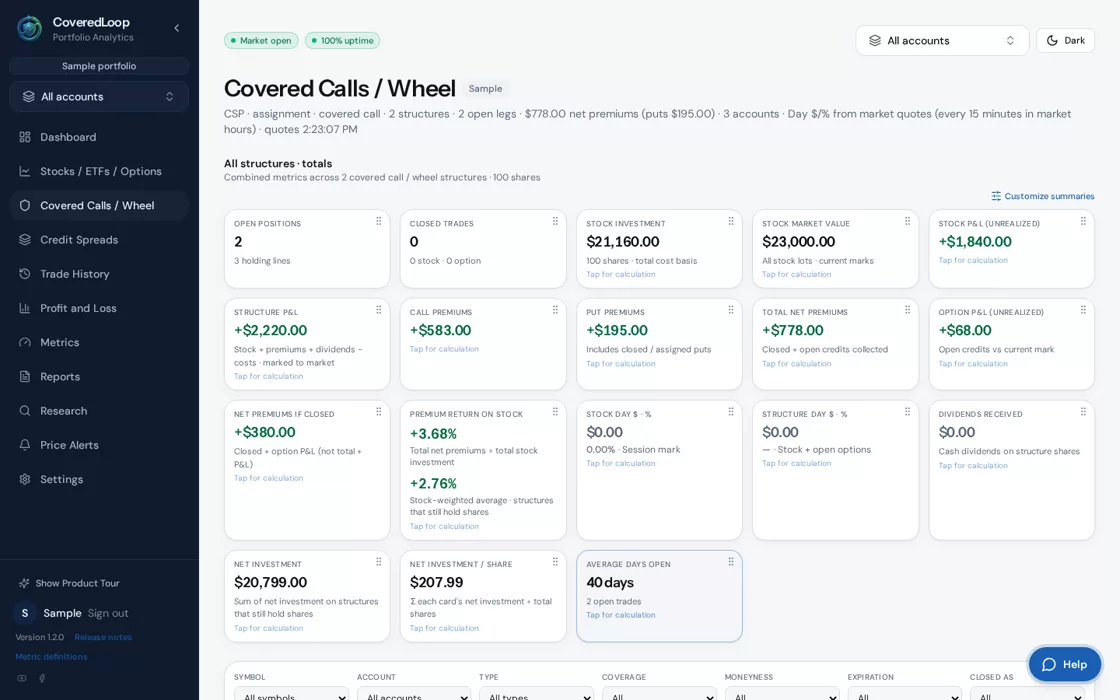
The wheel is a path: cash-secured put, assignment into stock, covered call, maybe assignment away, maybe another put. A ticker-level journal (“I traded AAPL this month”) erases that path. A fill-level journal (“sold a put, bought stock, sold a call”) never adds the premiums up.
CoveredLoop treats a wheel as a structure when the lots belong together, and as separate structures when they do not. This page is how to journal that without inventing a second set of numbers. It is not a recommendation to run the wheel. Assignment, gap risk, and early exercise are real. Read the risk disclosures.
Why the put premium has to survive assignment
If the short put closes into stock and the premium disappears from the card, the eventual covered-call yield is lying. The first chapter funded part of the stock. CoveredLoop keeps closed wheel-put premium on the same covered-call / wheel card as the shares and the later short calls.
When a put was a standalone trade that should never have joined the wheel, split it back out. When leftover shares should join an existing lot, merge. The book should match how you actually sized the trade, not how the broker printed the activity line.
Journal the sequence, not the mood
A useful wheel note is boring: plan at entry (strike, DTE, what you would do on assignment), what you actually did, and what you will not repeat. CoveredLoop’s journal sits on the P&L calendar, so the note is on the day whose realized and unrealized already include that structure.
Tags help more than adjectives. “Assigned / held / sold call / rolled” is searchable. “Felt fine about AAPL” is not. Trade history can take a note in one click when assignment hits midday and you do not want to wait for the evening recap.
Rolls and dividends are part of the same story
Rolling the call is not a new wheel. It is the same lot with a different short strike or expiration. Adding a dividend should not create a stray equity line. If your journal says “held through ex-div” and the cash ledger on a live Tradier book already has the dividend, you should not be reconciling that by hand in a notebook.
Sample and Manual use the cash you enter. Live Tradier pulls ACH, dividends, interest, and fees from the activity log. Paper stays a separate book so practice wheels do not contaminate live P&L.
Review in one account filter
When you ask “did this wheel process work in the IRA,” the answer is the same account picker as the dashboard, metrics, and calendar. Win rate and premium on a wheel sleeve are meaningless if paper and live are summed by accident. Combined P&L leaves paper out unless you turn that book on.
From idea to a sample wheel
Research can rank a cash-secured put or covered-call idea and add it to Sample so you see the structure card before you type a live ticket. That is the cheapest way to learn how CoveredLoop groups the sequence.
Related: covered-call P&L and yield, journal vs spreadsheet, What We Offer.