
Stories from the desk
A modern take on the trading blog — short, specific notes on covered calls, credit spreads, and how CoveredLoop thinks about the book.
CPI Week With Sleepy Index Vol: Event Risk When the VIX Looks Calm
Index volatility has been grinding in a low band even as September’s calendar fills with CPI and the FOMC. How options desks can separate “quiet tape” from “priced event,” and what to log before the prints — without turning the week into a prediction contest.
Read storyAfter the Jobs Beat: What Rising Fed-Hike Odds Mean for Options Sellers
August payrolls crushed expectations and pushed September hike odds higher. A short desk note on how rate repricing shows up in yields, growth-stock IV, and the way covered-call and credit-spread books should be reviewed — not a call to trade the Fed.
Read story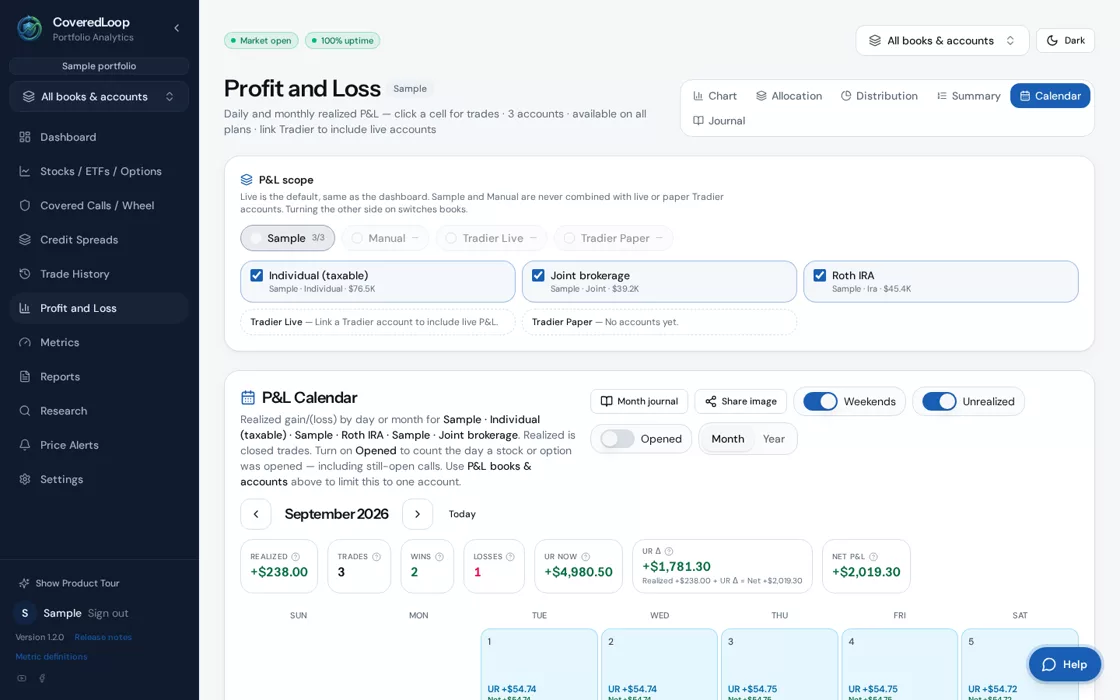
Options Trading Journal vs Spreadsheet for Multi-Leg Strategies
Spreadsheets survive until the third roll. A journal next to daily P&L keeps multi-leg structures, notes, and the rollforward on one definition of the book.
Read storyAnalytics Is Not a Scoreboard. It’s the Process.
Most traders treat analytics like a trophy case. Win rate on the wall. A green month screenshot. A Sharpe they mention once and never open again. The traders who last treat analytics as something else: the operating system of the trade itself. The process is not “spot a ticker, click buy.” It is a loop—research, size the risk, execute a plan, journal the gap, let the numbers grade you, change one
Read story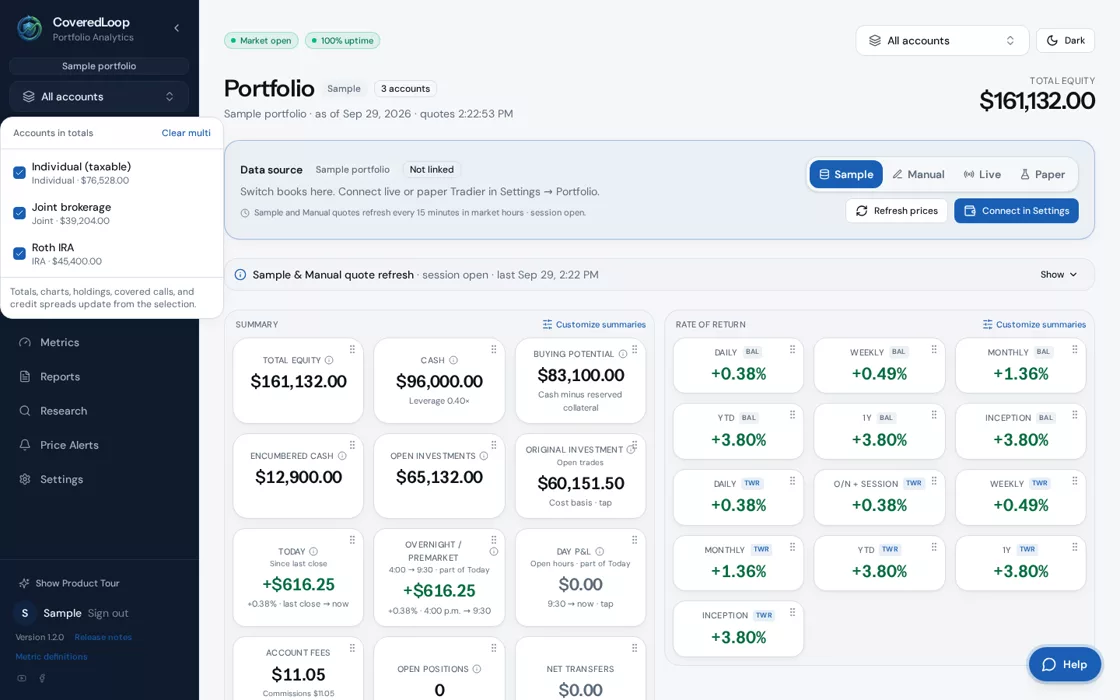
Tradier Sync vs Manual Portfolio Tracking
Sample is for learning the product. Manual is a book you type. Tradier live and paper sync marks and cash. When each source is the right one, and how they stay separate.
Read story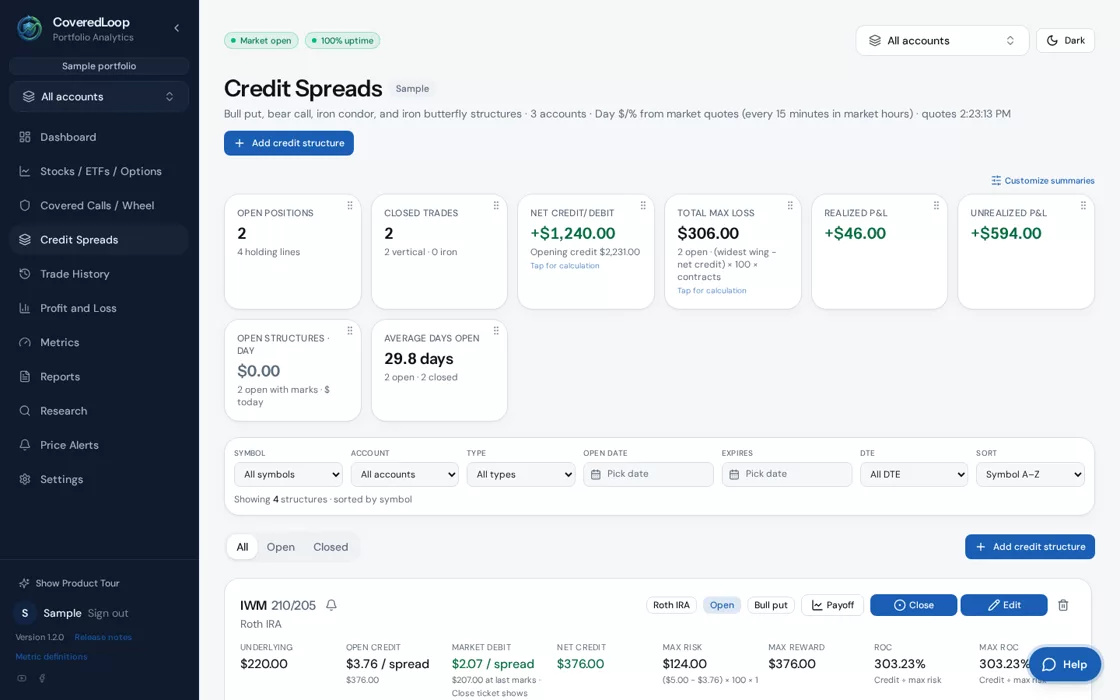
Credit Spread Metrics That Matter: ROC, Max Risk, Duration
Credit is the easy number. Return on capital, max risk, and duration are what make two 40-cent credits incomparable. How CoveredLoop puts them on the structure card.
Read storyImplied Volatility Is the Hidden Price Tag on Every Option—Here’s How It Actually Moves the Market
Implied volatility doesn’t just influence option prices—it often dominates them. This piece breaks down the mechanics of how IV shapes premiums, why rising IV can inflate costs even when the underlying stays flat, and how disciplined traders turn volatility regimes into edge rather than surprise.
Read storyAI & Semiconductor Stocks in 2026: Overvalued Bubble or Earnings-Powered Opportunity?
Semiconductor stocks posted large gains in 2026, and published valuation multiples sit above some long-run averages. This note explains how those multiples are usually compared. It does not say whether any stock is cheap, expensive, or a bubble.
Read storySelecting the Right Underlying for Covered Calls: A Disciplined Framework
Thoughtful criteria for choosing stocks that support consistent covered-call income without unnecessary capital risk.
Read story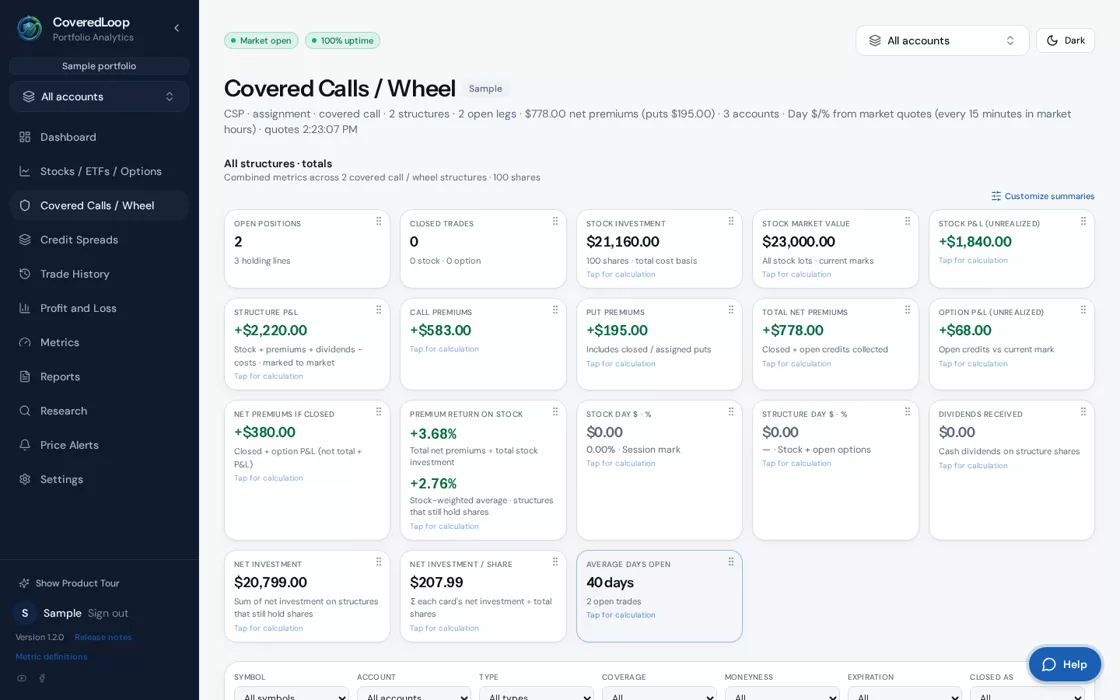
Wheel Strategy Journaling: Puts, Assignment, Covered Calls
The wheel is a sequence, not a ticker. How to journal cash-secured puts, assignment, and covered calls as one structure so premium and lessons stay attached.
Read storyHow to Track Covered Call P&L and Premium Yield
Separate stock P&L from net premiums and yield so a covered-call lot is one structure, not a pile of fills. How CoveredLoop keeps those numbers on the same card.
Read storyQuestions
What is Insights?
Insights is a set of short notes on covered calls, credit spreads, and how CoveredLoop thinks about the book.
Are the notes investment advice?
No. They are educational notes. They are not a recommendation to buy or sell an option.
How do I read a note?
This page lists published notes, newest first. Open a card to read the full note.
Is there a feed?
Yes. Notes are also published at /insights/rss.xml.